From North to South, passing through the centre and the islands, our Italy is a peninsula to be discovered and appreciated.
Scenery and landscapes, sea and mountains, a warm welcome, wine and food, art, culture and much more: these are just some of the aspects that make each Italian region unique and special.
The tip of the boot is occupied by a region rich in history and culture, with marvellous resorts, places with spectacular natural beauty and an enviable culinary tradition: Calabria.
If you are planning a holiday in this region, read this list of 15 must-see attractions in Calabria carefully!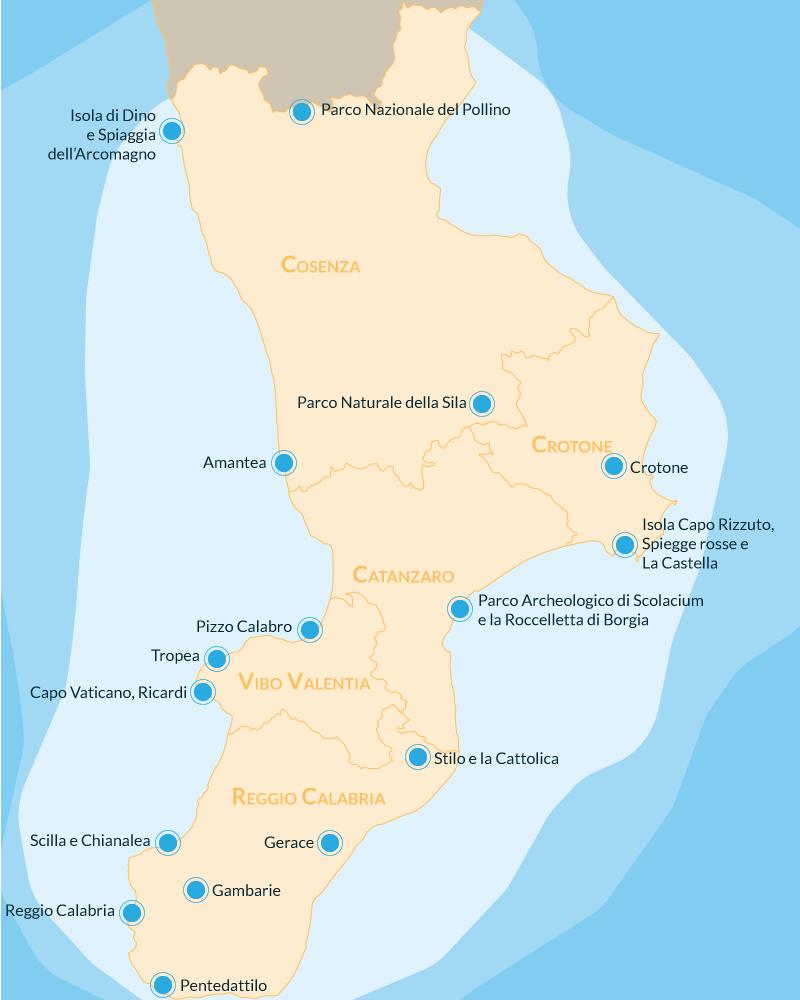
1 - Sila Natural Park
 Situated between the provinces of Cosenza, Catanzaro and Crotone, the Sila Natural Park represents the mountainous area of Calabria, excellent for discovering a hidden part of this region that stretches over 73,695 hectares and has been declared a World Heritage Site.
It will be difficult to visit the whole of Sila in one or just a few days, so here are some places in the park that are really not to be missed. Lovers of skiing in winter will certainly love the resorts of Camigliatello and Lorica, while Lago del Passante is the ideal place for a peaceful picnic. The villages of Palumbo, Racise and Buturo offer atmospheric walks in the woods in contact with the local fauna and flora, and finally, the Orme nel Parco amusement park among the trees, for adults and children, in the Tirivolo locality.
Last but not least, if you visit Sila, you cannot fail to taste the exquisite and rich Sila gastronomy based on local products such as wild boar meat, mushrooms, potatoes and provola cheese!
2 - Tropea and Pizzo Calabro
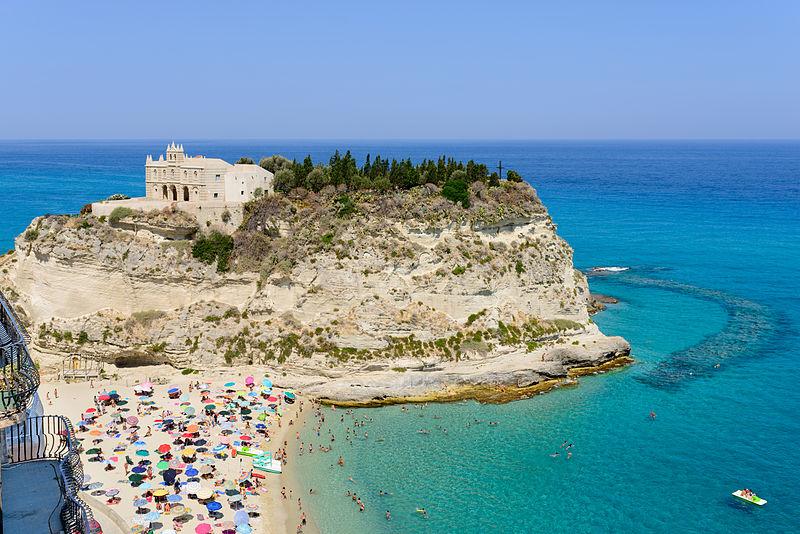 Photo by Norbert Nagel. Tropea and Pizzo Calabro, both renowned seaside resorts, are located just a few kilometres from each other along the Tyrrhenian coast, ideal to visit together in a single day.
One usually starts the day in Pizzo Calabro with a good breakfast of Pizzo truffles in one of the many ice-cream parlours located in the main square, with a panoramic view of the sea and the Aeolian Islands (which can be visited with a day tour from Tropea) in the distance. Worth visiting in Pizzo is the historic centre with its cobbled streets and two main attractions, the Church of the Immacolata and the Murat Castle.
The day continues in Tropea and who has never seen a picture of the beautiful sea view and sanctuary? The village offers this fantastic view and an historic centre that is a tangle of alleyways. The unmissable attraction is the Sanctuary of Santa Maria dell'Isola, located in a characteristic position on a small promontory, to be reached via a steep flight of steps.
3 - Stilo and the Cattolica
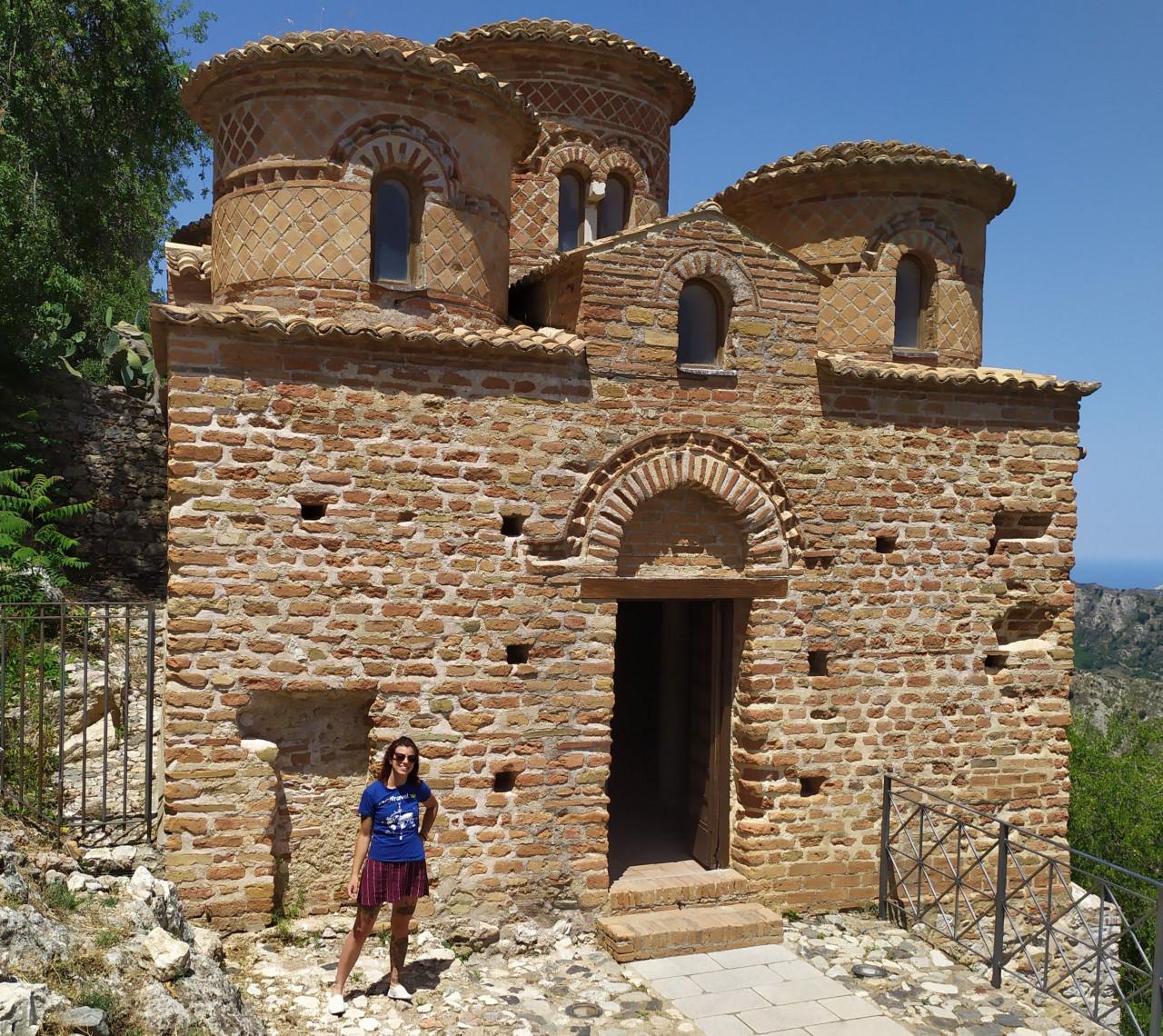 Photo by Cristina Alberto. Stilo is a small village in the province of Reggio Calabria, situated on a hill and surrounded by greenery, a few kilometres from the Ionian coast on which it offers a beautiful view. It is a real jewel of Byzantine art, interesting both architecturally and culturally. In fact, it is the birthplace of the philosopher Tommaso Campanella, whose house can be visited and a park named after one of his works,'The City of the Sun', has been dedicated to him. The historical centre, on the other hand, preserves medieval features such as the horseshoe shape, the city walls, the remains of the castle and many small churches.
The real attraction, however, is the Cattolica di Stilo, a small church towering over the town, built by a settlement of monks during the 10th century, whose interior still preserves Byzantine mosaics and frescoes. There are also the church of San Nicola da Tolentino, the church of San Francesco with frescoes by the painter Francesco Cozza, the convent of San Domenico, the baroque church of San Giovanni Theresti and finally the 14th century cathedral.
4 - Capo Vaticano, Ricardi
 On the Tyrrhenian coast lies one of the most famous promontories in Calabria, known as Capo Vaticano. It stretches from the Gulf of Santa Eufemia to the Gulf of Gioia Tauro with a fantastic overhang over the sea. giving rise to one of the most beautiful beaches in Italy. Small sandy bays of fine white sand alternate along the stretch, often only accessible by sea or via steep paths. The colour of the water is vivid and intense at every point and changes from turquoise green to deep blue.
Behind, among the rocks, Mediterranean plants sprout up to enrich the landscape and, last but not least, the extremely rich fish fauna and flora to be discovered through one of the most popular activities in the area, diving.
5 - Amantea
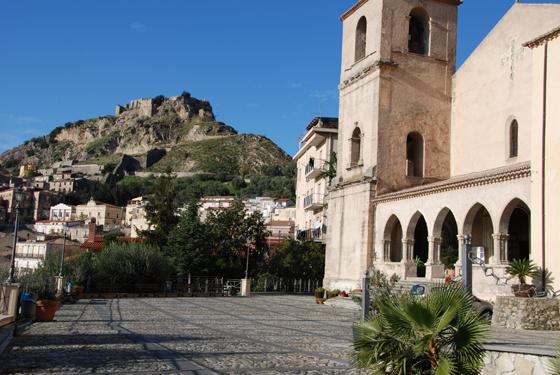 Photo by Stefanocaruso1984. Amantea is one of the main tourist centres of the Tyrrhenian coast, defined as the city of two souls: the 'old' one of medieval imprint and the 'new' one, modern and full of life. It develops in height and from the top it offers a splendid view of the sea and the lower part of the town.
In the 'old' part, the ruins of an ancient mediaeval castle with a watchtower can be found at the top of the hill. Another site of interest is the monastery of San Bernardino da Siena, an excellent example of a Romanesque church, now a national monument.
The new area, on the other hand, is mainly developed between the main square and the corso, a long life on which modern buildings and historical Baroque palaces alternate, made lively by a succession of clubs, restaurants and ice-cream parlours. In this regard, anyone visiting Amantea should definitely try the local artisanal ice cream! Finally, Amantea is perfect for spending several days there as its port offers the possibility of a one-day visit to the Aeolian Islands.
6 - Scolacium Archaeological Park, Roccelletta di Borgia and Soverato
 Photo by Michelvincenzo. The Scolacium Archaeological Park is located in the municipality of Borgia, near Catanzaro Lido, and is the most important on the entire Ionian coast, as it represents the first city founded by the Greeks. Formerly called Skylletion, it later became the Roman Scolacium. Today, important archaeological discoveries remain as evidence of this, immersed in a verdant setting of olive trees and other Mediterranean plants, where ancient structures such as dwellings, temples, theatres and statues, as well as finds of all kinds (amphorae, coins, ceramics, jewellery).
At the entrance to the park is the Roccelletta di Borgia, a basilica dedicated to Santa Maria della Roccella that mixes Romanesque, Byzantine and Arab styles. Just 20 minutes away, to take up the whole day, we also recommend Soverato, the main tourist centre on the Ionian coast where you can spend your time between beaches, markets, merry-go-rounds, a stroll along the seafront and an aperitif at the bathing lidos.
7 - Reggio Calabria
 Photo by Cristina Alberto. Reggio Calabria is a city of immense charm with its mix of history and worldliness and the scenic beauty of the view of the Sicilian coastline. The undisputed attraction are the two statues of the Riace Bronzes to be admired in the National Archaeological Museum, along with numerous other artefacts linked to the ancient history of the entire Reggio area.
Another pride of Reggio Calabria is theextensive stretch of beach bordered by the Lungomare Falcomatà, also known as the most beautiful kilometre in Italy, a title given to it by the succession of palm trees, statues and buildings including the winged Victory statue, the colourful sculptures of Rabarama, Villa Zerbi, Palazzo Zani and the Arena dello Stretto where the statue of the goddess Athena the fighter stands. Another symbol and unmissable attraction of Reggio Calabria is the Aragonese Castle built as early as the year 536.
8 - Gerace
 Photo by [raven. Gerace is a small village perched on a cliff that enjoys a marvellous position, which gives it a 360° panoramic view, with the Ionian coast in front and the Aspromonte park behind it. To enjoy this fantastic view, you absolutely must go and walk around the former convent!
But Gerace is not just a village, it is a medieval village among the most beautiful in Calabria and in the ranking of the most beautiful in Italy. In fact, its historical centre is developed within city walls and is accessed through 'gates'. Walking through its narrow streets takes you back in time with narrow cobbled alleys, old shops and inns, and a succession of churches, from the main cathedral to smaller churches. In this regard, let us mention its title of the Land of 100 Churches!
9 - Dino Island and Arcomagno Beach
 Photo by Cristina Alberto. In the north of Calabria's Tyrrhenian coast, a succession of cliffs leads from Praia a Mare to San Nicola Arcella, creating a rather jagged and rather scenic stretch of coastline, on which a series of paradise spots alternate between rocky and sandy beaches. In front of Praia a Mare emerges the small, natural island of Dino, covered in lush nature, characterised by underwater caves and surrounded by crystal-clear waters. It can be reached by swimming without any difficulty, but many group boat trips depart daily to take visitors snorkelling.
Not far away, in the municipality of San Nicola Arcella, between imposing cliffs overlooking the sea, is the tiny but enchanting beach of Arcomagno. A small strip of sand bathed by crystal-clear Caribbean-coloured waters, it can be reached via a steep and scenic path between the cliffs. Its peculiarity is that it is dominated by a natural arch created between the rocks that lets in a beam of light illuminating it and creating a real spectacle for the eyes! Our advice is to visit it before midday so as to fully enjoy the sun.
10 - Pollino National Park
 Photo by Brunofrancesco. Although Sila is the best-known mountainous area in Calabria, we cannot fail to mention the Pollino National Park, by the way, the largest in Italy and aUNESCO World Heritage Site since 2015. It is located between Basilicata and Calabria and touches the provinces of Cosenza, Potenza and Matera, with a total of 192,565 hectares, of which 103,915 on Calabrian territory.
Its name is due to the mountain massif of the same name that occupies it, but the park is made up of many spectacular natural beauties such as the Valle del Fiume Lao (Papasidero), the Gole del Raganello (San Lorenzo Bellizzi) and the Valle del Fiume Argentino (Orsomarso). Needless to say, therefore, there are many opportunities for visits and sports within the area! In the summer, for example, you can go on long hiking trails, trekking or mountain biking. Rafting along the various watercourses is also very popular. In winter, on the other hand, when the entire environment is tinged with white, it attracts lovers of cross-country skiing and snowshoeing.
11 - Crotone
 Photo by AlMare. Crotone is one of Calabria's five capitals, a city of ancient origins that still preserves important sites throughout the province. Founded by Greek colonists, it later became a renowned centre of Magna Graecia, and was later chosen by the philosopher Pythagoras as his residence, contributing to cultural growth with his school of thought.
The city today is divided into old and new and the two areas join at Piazza Pythagoras. From here starts a labyrinth of narrow alleys among which are the Duomo, better known as the Basilica-Cathedral of Santa Maria Assunta, the National Archaeological Museum to discover the history of the Crotone area, the Gardens of Pythagoras to relax amidst the greenery, and finally the Castle of Charles V, the medieval fortress symbol of the city. Don't miss a stroll along the lively seafront promenade with its wide choice of venues for all-night entertainment.
12 - Le Castella and the Red Beaches, Isola di Capo Rizzuto
 Photo by Caterina Mirabelli. Le Castella is a famous tourist resort in the province of Crotone, known for its Aragonese fortress erected in the middle of the sea, on a platform accessible via a narrow path. The castle has ancient origins and was built for defensive purposes. It was in fact used as a shelter for soldiers engaged in protecting the territory from attacks by sea. Today, photographs, armour and tools of the past can be admired inside, while from the top of the narrow control tower there is a beautiful view of the coast.
After visiting the castle, a long stroll along the colourful and characteristic Corso surrounded by restaurants, ice-cream parlours, souvenir shops and shops selling local products awaits you. We recommend a visit to Le Castella between late afternoon and evening. Not far from there, to occupy the daytime hours if you go in summer, we recommend the Spiagge Rosse (Red Beaches), an expanse of golden sand embellished with red rocks, blue waters and Mediterranean vegetation. Transparent-bottom boat trips are popular here to admire the underwater fauna of the Capo Rizzuto Marine Reserve.
13 - Pentedattilo
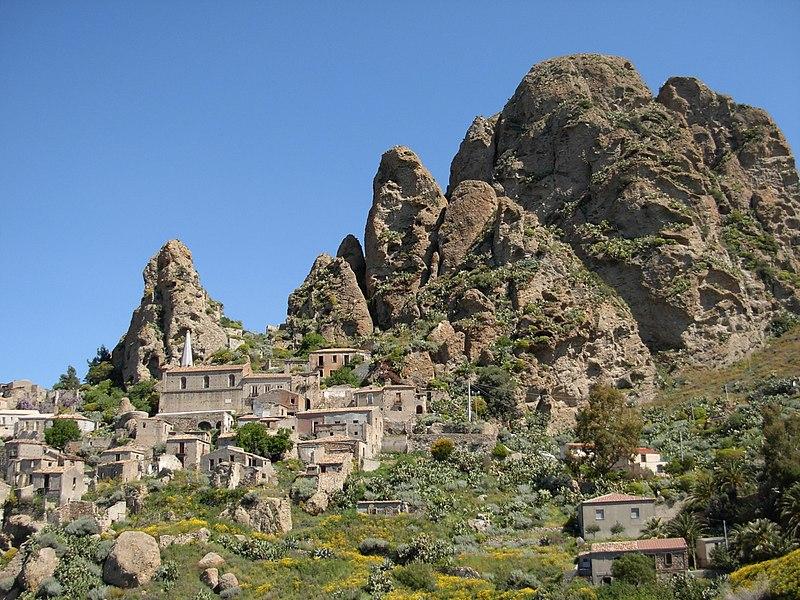 Photo by Salvatore Migliari. A small village nestled in the mountains of Aspromonte, a hamlet of Melito Porto Salvo in the province of Reggio Calabria. Pentedattilo lies at the foot of a rock and its name means five fingers, in reference to the particular shape of the rock, which resembles a hand.
The village has ancient Greco-Roman origins and its other characteristic is that it has been a ghost town since 1971. Pentedattilo was in fact declared uninhabitable and consequently abandoned by the population, which moved slightly further down the valley to form a new small centre from which the old one can be admired. However, in recent years, thanks to the contribution and work of various organisations and associations, small local craft activities have been resurrecting the village. So, in Pentedattilo, the main attraction to visit is the village itself!
14 - Ski slopes in Gambarie
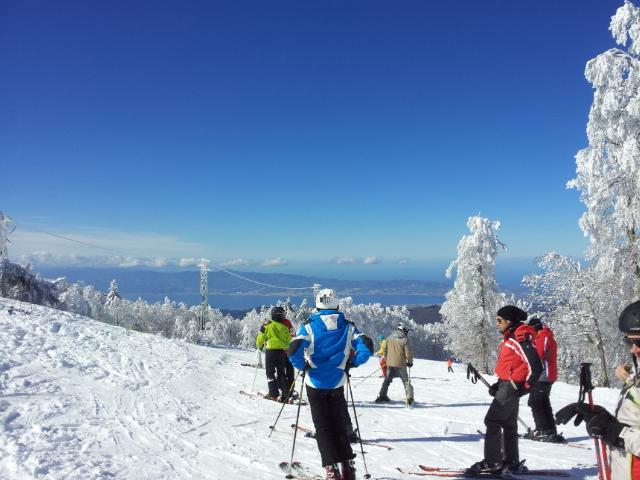 Photo by Domecost80. If you think Calabria is just heat, sea and sun, you have probably never heard of a place like Gambarie! In the province of Reggio Calabria, there is a true skiing paradise that is tinged with white every winter and offers beautiful scenery and landscapes.
Gambarie is located in the heart of the Aspromonte National Park, at an altitude of 1,400 metres, and is the largest mountain tourist resort in Calabria, with 4 ski lifts and 11 km of slopes. The ideal place for those who love skiing or snowboarding in winter and want to discover new resorts rather than the more famous ones in northern Italy. Gambarie's real attraction, however, is its 360° panoramic view of the Strait of Messina, Mount Etna and the Aeolian Islands.
15 - Scilla and Chianalea
 Photo by Cristina Alberto. Scilla is a small village in the province of Reggio Calabria, one of the most beautiful seaside resorts in Calabria. When you arrive, you will be greeted by its view of the sea and from there you can wander through the village's characteristic narrow streets to reach the beautiful beach. When you reach the end, you will be able to enjoy clear blue water like few others, dominated on the right-hand side by an imposing cliff overlooking the sea, with the Ruffo Castle on its summit.
A footbridge skirts the cliff leading to Chianalea, the historic centre of Scilla, listed among the most beautiful villages in Italy. Chianalea is a long cobbled street, lined with old houses and places to have an aperitif or stop for dinner, to be walked in peace while enjoying the views from the narrow streets leading out to the sea.
Plan your trip: how to arrive and where to stay
To get to Calabria there are two reference airports: Lamezia Terme and Reggio Calabria. Both overlook the Tyrrhenian Coast, but Lamezia Airport is close to the area where the region 'thins out', so it is strategic for reaching the Ionian Coast. Flights from €49.00 - look at the offers
It is essential to rent a car as soon as you land, Calabria is a region to visit on the road. If you choose the Tyrrhenian Coast itinerary, base yourself in Reggio Calabria, Tropea and Amantea. Accommodation from €50.00 per night.
If you prefer to visit the Ionian Coast, base yourself in Catanzaro Lido to visit the central part of the coast, then Soverato for the southern area, and finally Crotone for the northern area. Accommodation from €55.00 per night.
Alternatively, you can plan a mixed itinerary between sea and villages, visiting the best of both coasts. In this case, land in Lamezia Terme and stop off in Pizzo, Tropea, Capo Vaticano, Scilla/Chianalea and Reggio Calabria, Pentedattilo, Gerace, Roccella Ionica, Stilo, Soverato, Scolacium Park; staying in towns such as Tropea, Reggio, Roccella Ionica, Catanzaro. Accommodation from €59.00 per night.