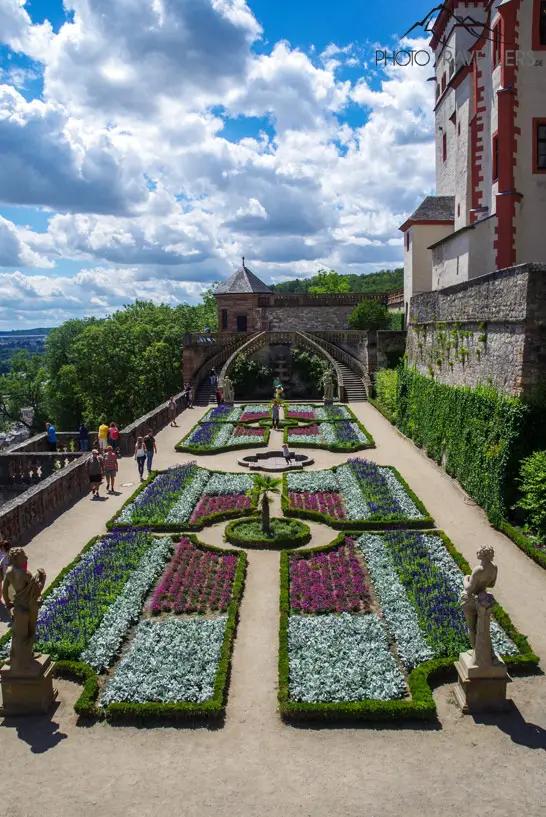
The Fürstengarten of the fortress is definitely one of the top sights in Würzburg
Here you can find our Würzburg highlights at a glance:
Würzburg Residenz
Würzburg Cathedral
Falcon House
Lady Chapel
Würzburg City Hall
Old Main Bridge
Marienberg Fortress
Käppele pilgrimage church
Main Promenade
Neumünster
Map: The top sights in Würzburg
Find all the major tourist attractions in Würzburg on our interactive map:
1. Würzburg Residence
We start our sightseeing tour with a visit to the city's most famous and impressive building - the Würzburg Residenz (website). The magnificent baroque palace is one of the most important residence buildings in the whole of Europe and has been a UNESCO World Heritage Site since 1981. It is THE top sightseeing attraction in the city.
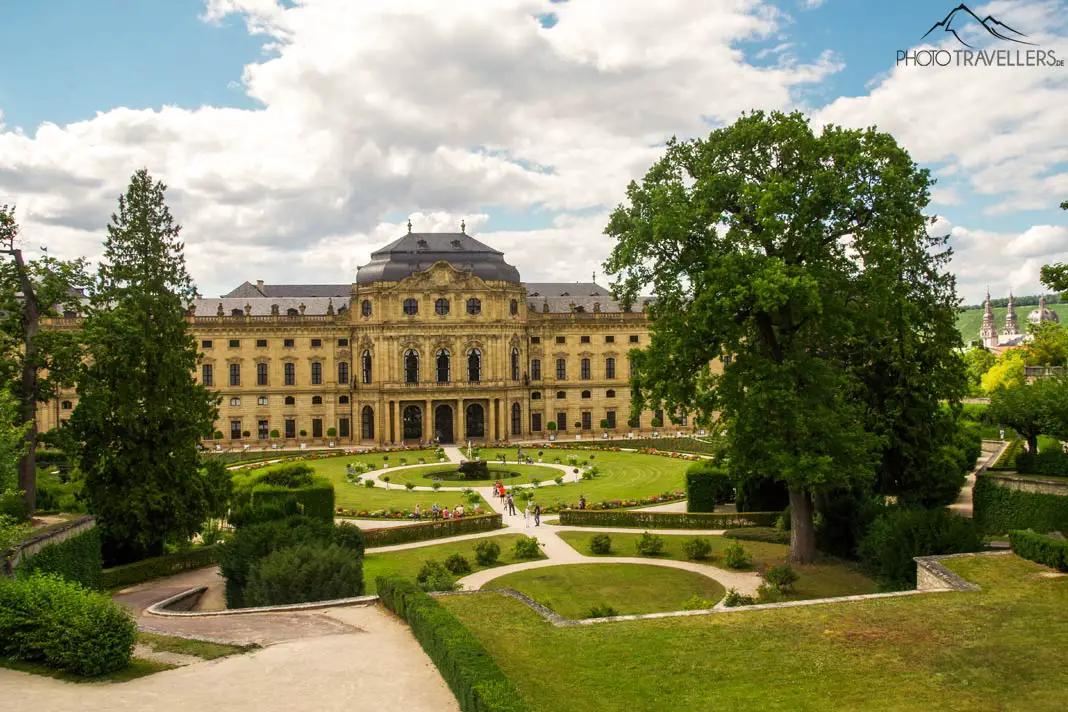
The Würzburg Residenz in all its glory. You can't miss this great attraction
The residence of the Würzburg prince bishops was built from 1720 to 1744 according to the plans of the court architect Balthasar Neumann - remember his name: you will come across him many times on our tour of Würzburg.
The impressive ornamentation of the interior was also completed in 1781. Testimony to this stroke of architectural genius is the picturesque staircase with the largest continuous ceiling fresco in the world.
The Residenz was badly damaged in the bombing raid on Würzburg in 1945 and had to be rebuilt after the end of the war, which took until 1987. Today you can visit around 40 of the 340 rooms, including the Mirror Cabinet decorated with reverse glass paintings, the pompous Emperor's Hall and the White Hall, which, in contrast to the other rooms, appears plain and colourless.
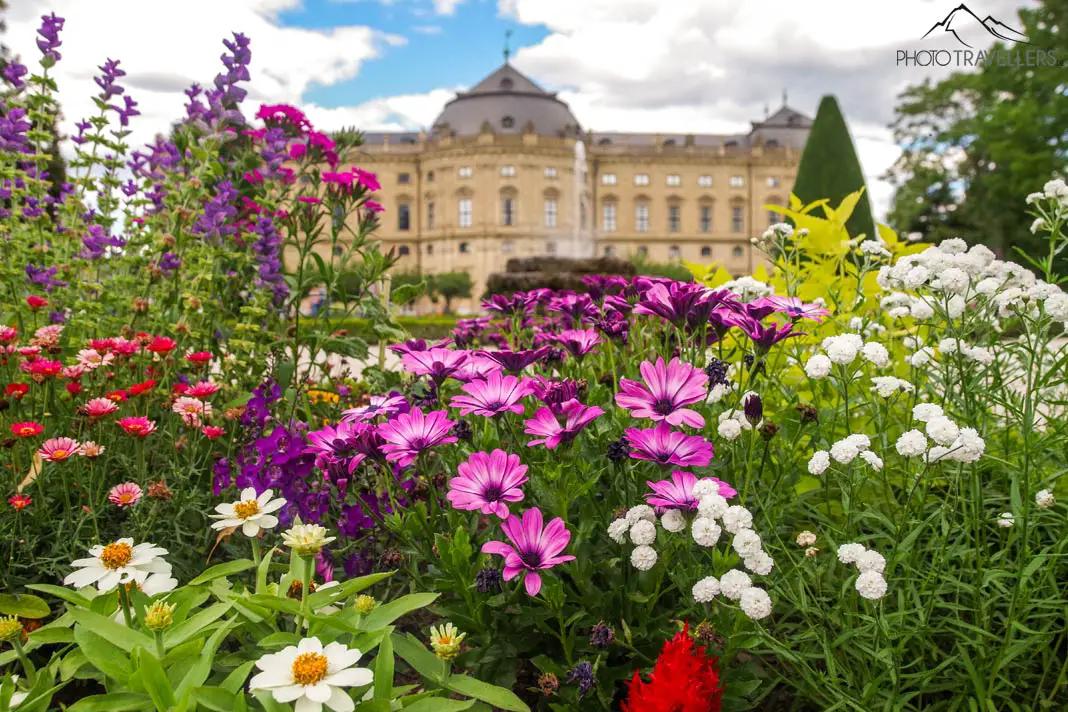
The Court Garden offers relaxation and great photo opportunities
The richly decorated Court Church of the Most Holy Trinity, which impresses not only with its elaborate decoration but also with its three oval dome vaults, is also particularly worth seeing. In the symmetrically laid out courtyard garden, you can relax after a tour while enjoying the view of the Residenz and parts of the city.
Address: Residenzplatz 2(Google Maps)
Hotel tip: The Hotel Alter Kranen(check prices here*) offers lovingly designed rooms with a view of the Main Bridge and the Marienberg Fortress - there is hardly a more beautiful location.
2. Würzburg Cathedral 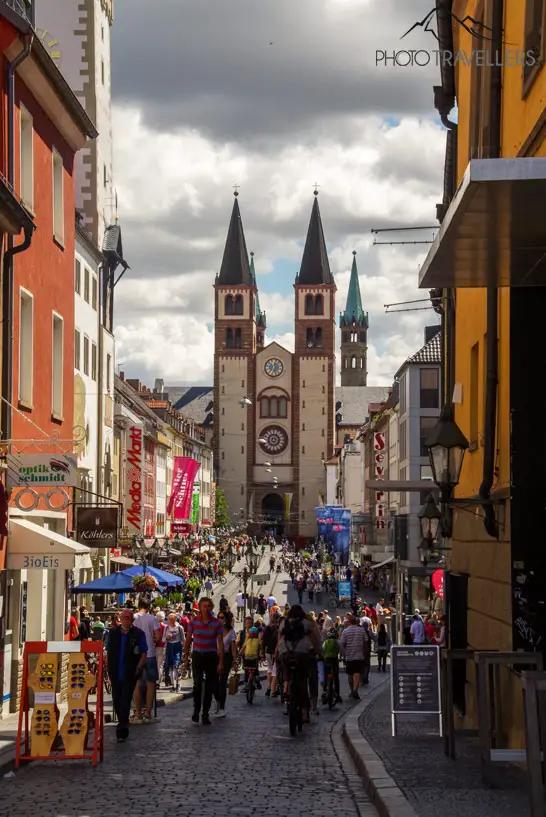 St. Kilian's Cathedral impresses even from a distance
From the imposing Residenz, we now move on to the next historical sight. Würzburg Cathedral(website) is dedicated to St. Kilian and is therefore also called St. Kilian's Cathedral. The church impresses with its double-towered façade and a total length of 105 metres, making it the fourth-largest Romanesque basilica in Germany.
The cathedral was built between 1045 and 1075 and repeatedly rebuilt over the centuries. It was badly damaged in the bombing raid of 1945, and a year later large parts of the north wall and the nave collapsed. The stucco in the transept and choir room, however, has been preserved.
During reconstruction, the church was re-romanised, creating an exciting mix of different architectural styles. Particularly worth seeing is the richly decorated Schönborn Chapel in the northern transept, which was built in the 18th century by Balthasar Neumann as a burial place for the prince-bishops of the Schönborn family.
Address: Domstraße 40(Google Maps)
3rd Falcon House 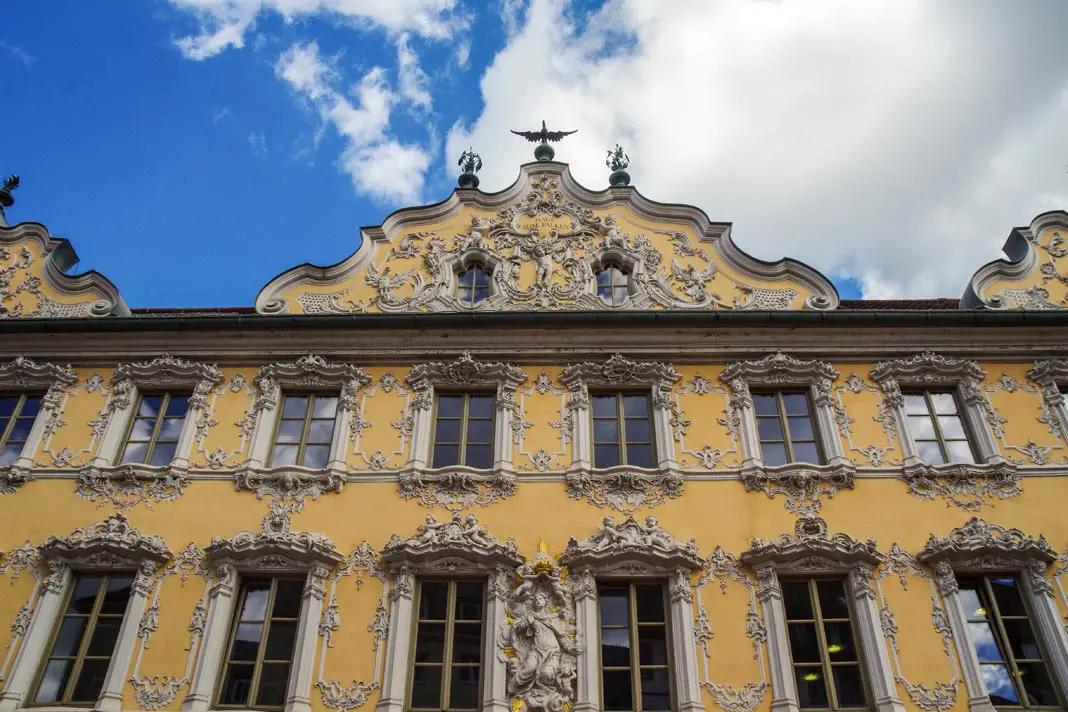 The façade of the Falkenhaus is truly enchanting and must not be missing from our list of the most beautiful sights
An absolute eye-catcher on the market square is the Falkenhaus, whose rococo façade with its elaborately curved gables is one of the most beautiful in the whole of southern Germany. In the Middle Ages, the cathedral priest lived in the house, which was bought by innkeeper Franz Thomas Meißner in 1735. In 1751, his widow Barbara had the magnificent façade built by Upper Bavarian stucco artists.
After its destruction in the Second World War, the three-storey Falkenhaus was rebuilt true to the original. Since 1952, the building has housed the city library and the tourist information office, where you can pick up one or two insider tips for your city exploration and other sights.
Address: Marktplatz 9(Google Maps)
The best travel guides for your city trip to Würzburg
The following travel guides are the best companions for exploring Würzburg. With their exciting insider tips and one or two other sights, your city trip is guaranteed to be an unforgettable experience.
*Advertising link / Images from the Amazon Product Advertising API
4th Lady Chapel 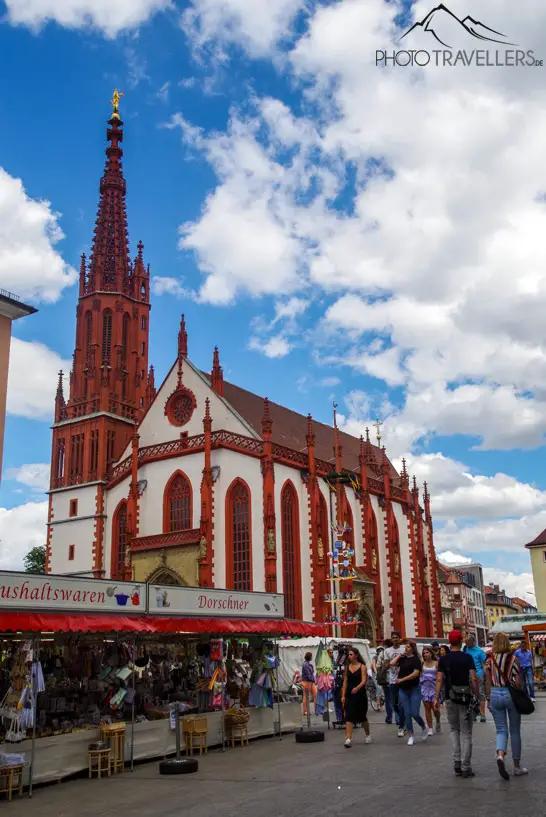 The red and white St. Mary's Church on the market square is really striking
The market square is also where our next sight is located: the Marienkapelle - not to be confused with the Marienkirche on Festung Marienberg. Despite its size, it is considered a chapel because it was never endowed with parochial church rights.
However, its impressive red and white façade conceals a dark history of its origins. In the plague year of 1349, the Jewish population was blamed for the outbreak of the Black Death, which led to persecutions of Jews and the destruction of the Jewish quarter. The late Gothic Lady Chapel was built on the site of the burnt-out synagogue from 1377 to 1479.
As early as 1527, the church was in poor condition and so renovation work was carried out on the tower from 1556. It was badly damaged during the bombing of Würzburg in 1945 and had to be rebuilt after the Second World War.
Today you can admire the richly decorated portals and works of art in the interior as well as visit the tomb of the master builder Balthasar Neumann, whom you already know.
Another special feature on the outside of the Marienkapelle are the so-called Schwalbenlädle (swallow shops), which have brought the church rental income since 1437. On a tour here you will also come across Würzburg's smallest café.
Address: Marktplatz 7(Google Maps)
5. Würzburg City Hall 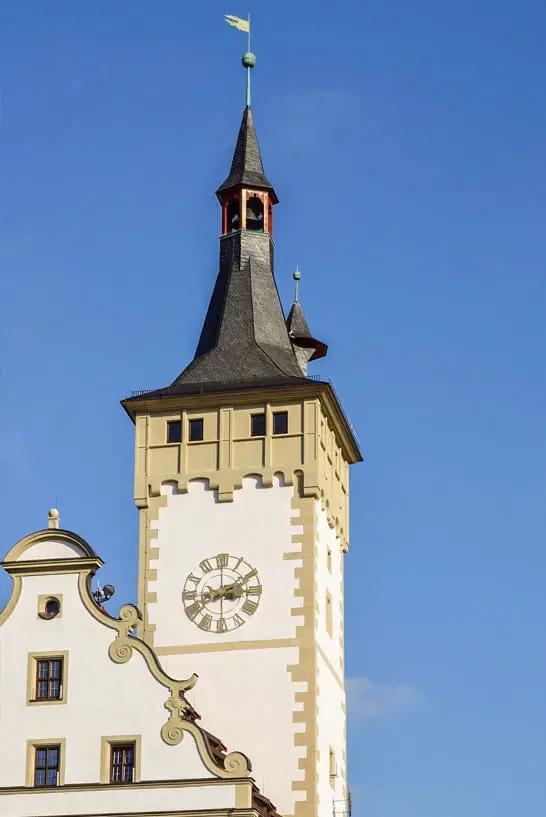 The Romanesque tower of Würzburg Town Hall
On your way towards the Main, you will pass the unique Würzburg town hall. Unlike other town halls, it consists of a building complex with several structures that were built in different eras for different purposes.
The oldest and at the same time most impressive part is the Grafeneckart, which has been part of the town hall since 1316. The oldest secular building in Würzburg impresses with its Romanesque tower, on whose south façade a sundial can be seen. On this side of the side wing - the so-called Grünbaum - you can also admire a painted lime tree. It is a reminder of the court l ime tree on the square in front of the Grafeneckart, where justice was once dispensed.
The Red Building, which was built in the 17th century in the late Renaissance style, adjoins to the west. On its entrance door, dates and marks recall special flood levels. North of the Grafeneckart is the former monastery of the Shoeless Carmelites, which was acquired by the city council in the 19th century.
In the course of time, further buildings were added to the town hall, whereby the building complex was completely destroyed in the Second World War - except for the Grafeneckhart and parts of the Red Building - and had to be rebuilt.
In the south wing, dating from the 1980s, you will find the Council Hall, on whose walls impressive frescoes retell events from Würzburg's history. The town hall is one of the city's most impressive sights. You shouldn't miss it.
Address: Rückermainstraße 2(Google Maps)
6th Old Main Bridge 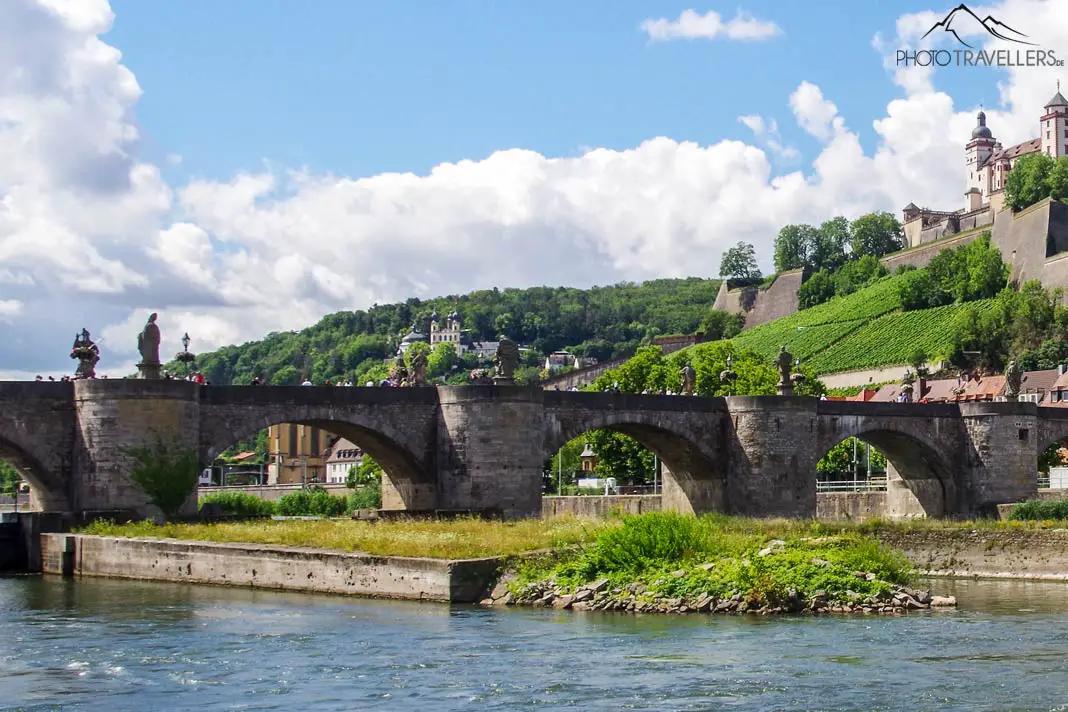 The Old Main Bridge is one of the city's most famous sights
Another landmark of the city is the Alte Mainbrücke, the oldest bridge over the Main in Würzburg. It connects the old town with the Marienberg fortress opposite and is reminiscent of the famous Charles Bridge in Prague.
Around 1120, a first stone bridge was built on this site for trading purposes. However, the ravages of time gnawed at the structure and so the bridge was rebuilt in the 15th century. Around 1730, the imposing sandstone statues of the saints were added.
In 1945, parts of the bridge were blown up by German troops and rebuilt until 1950. Nowadays it is only accessible to pedestrians and cyclists, so you can explore and photograph the sight at your leisure.
Tip: How about a glass of wine to top it off? On the Alte Mainbrücke (Old Main Bridge) you can enjoy the so-called Brückenschoppen (Bridge Pint) with a magnificent view of the Marienberg Fortress, the Old Town and the surrounding vineyards. You can't get more holiday ambience than that. Cheers!
Address: Alte Mainbrücke(Google Maps)
7. Marienberg Fortress
On the other side of the Main, another attraction worth seeing towers over the city: the Marienberg Fort ress(website) looks back not only on Würzburg, but also on three thousand years of history. A Celtic refuge was located on the site of today's fortress as early as 1000 BC.
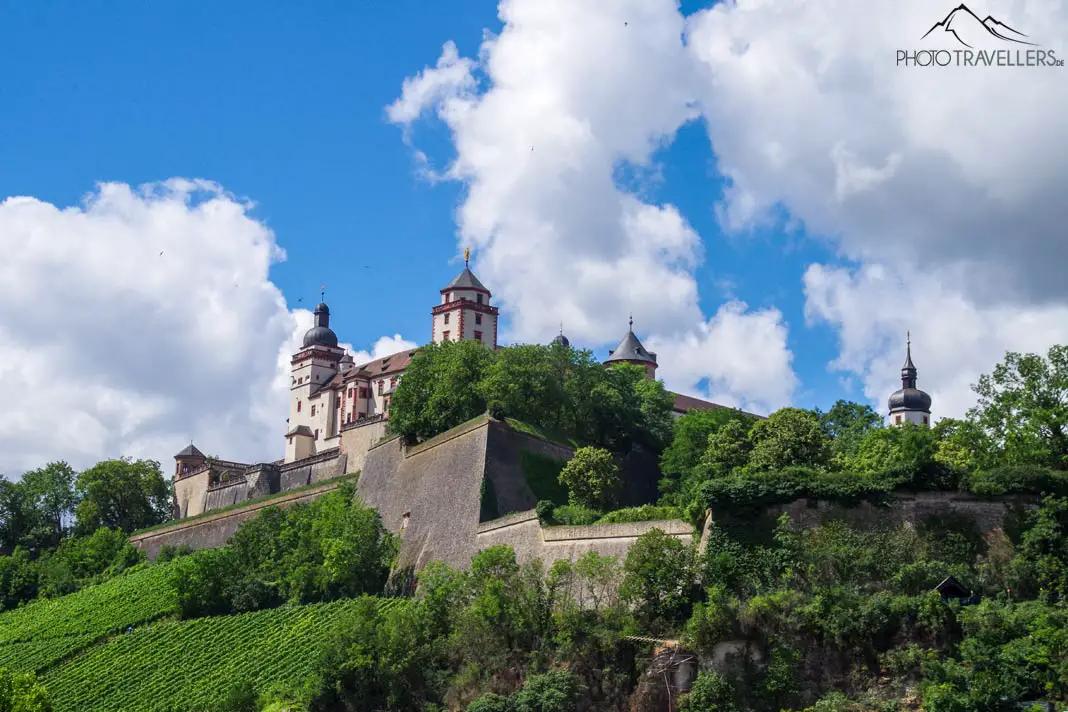
For us, the Marienberg Fortress is one of the most beautiful places in the city
In 706, the Marienkirche - Würzburg's oldest church - was consecrated and was the focal point of the castle complex founded in 1201. For over 450 years, the castle served as the seat of the Würzburg prince-bishops, being expanded into a Renaissance palace around 1600. Evidence of this can be seen in the Echterbastei and the Brunnenhaus, which is considered one of the most beautiful Renaissance-style buildings in Franconia.
After the castle was stormed by the Swedes in 1631, it was rebuilt into a Baroque fortress . During this time, the symmetrically laid out and artistically planted princely garden was also created, from which you still have a magnificent view of the city today. This sight attracts many visitors every day.
Marienberg Fortress is also home to the Museum of Franconia, where you can see important Franconian art treasures and evidence of Franconian wine culture. In the Fürstenbau (Prince's Building) you can visit the living quarters of the prince-bishops and the treasury and learn more about the history of Würzburg.
Tip: A beautiful hiking trail leads from the banks of the Main up to the fortress, on which you pass the vineyards on the hillside and feel the idyllic ambience in particular.
Address: Marienberg Fortress(Google Maps)
8. pilgrimage church Käppele
From the Marienberg Fortress you also have a great view of our next sight: the pilgrimage church of the Visitation of the Virgin Mary, better known as the Käppele (→ website).
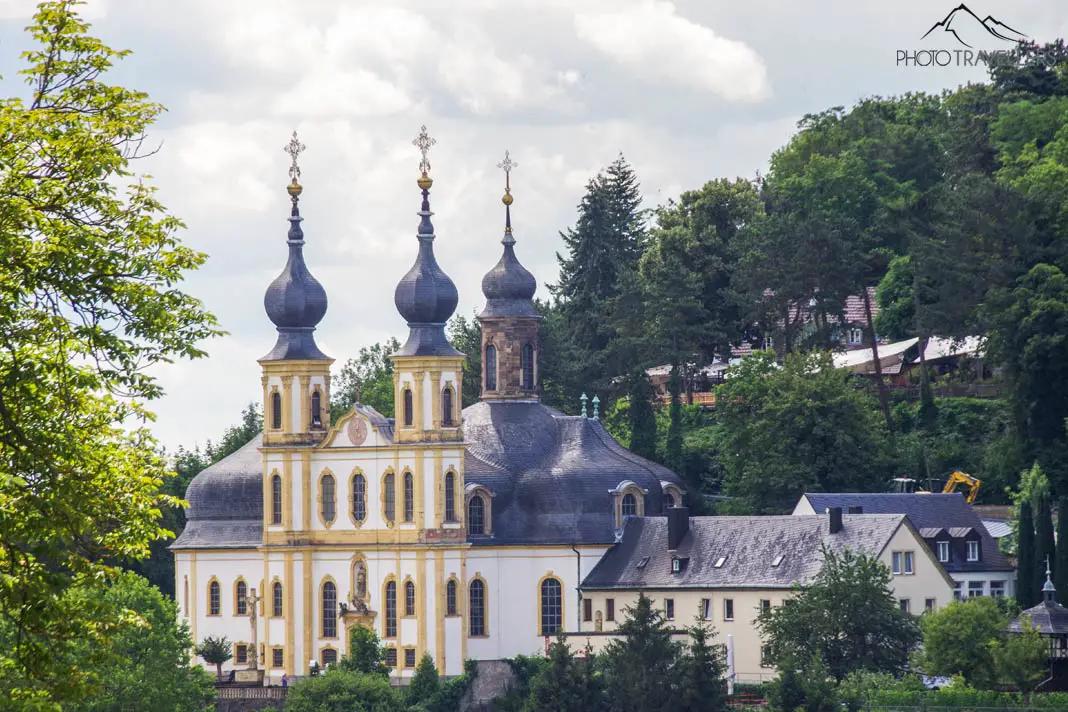
The Käppele photographed from Marienberg Fortress
The history of the church's origins is based on legendary events: During the Thirty Years' War, the son of a fisherman placed a wooden Pietà - a statue of Mary with the body of Jesus in her lap - in the vineyards on the Nikolausberg. The devout people who made pilgrimages there told of light apparitions and miraculous healings , and so the first pilgrimages to Our Lady of Sorrows began.
In 1653, a chapel of grace was built on this site, but today's pilgrimage church was not built until 1747 according to the plans of - three guesses - Balthasar Neumann. During the Second World War, the Käppele was one of the few church buildings in Würzburg to be saved twice from destruction and is still visited by many pilgrims today.
The best way to reach the pilgrimage church is via the impressive Stations Way, which leads upwards along 14 Stations of the Cross and 77 figures. As you climb the 300 or so steps, you are offered beautiful views of the city from the various terraces.
Address: Spittelbergweg 21(Google Maps)
9. main promenade
Now it's time for a bit of relaxation - and where better to do that than on the Main Promenade? The river promenade is a popular meeting place for Würzburgers - no wonder: with the beautiful view of the Marienberg Fortress and the Old Main Bridge, it's a great place to switch off and let your mind and feet wander.
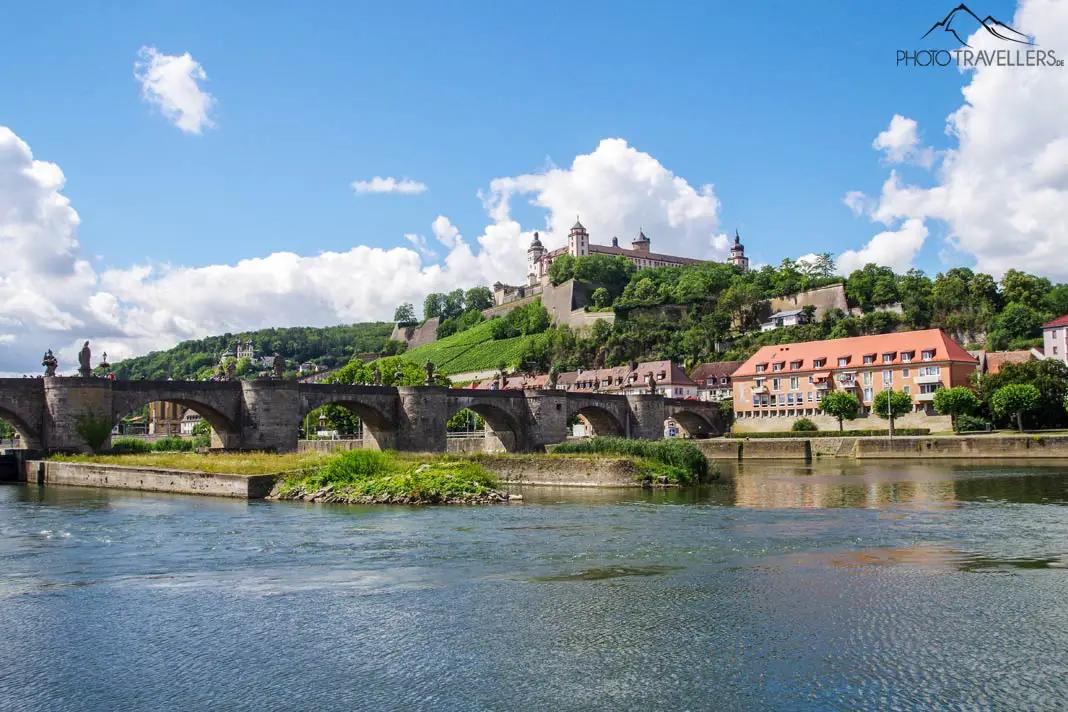
You have this great view from the Main promenade
If you're looking for something to eat, I can recommend the Fischbar zum Krebs (Google Maps). The cosy cutter on the Main quay serves fish & chips and other fish specialities - and a unique view to boot.
The Pizzeria Locanda (Google Maps) is also very popular, where you can simply take a delicious pizza to enjoy on the banks of the Main. An Gudn!
10th Neumünster
Back in the old town, another church is on our list of top sights. The Neumünster was built in the 11th century as a Romanesque basilica and has been extended and rebuilt over the years. In the 18th century, the church was given its magnificent Baroque façade and dome. In the city fire of 1945, the Neumünster was not as badly damaged as the cathedral, but still had to be renovated.
According to legend, the Irish itinerant bishop and current patron saint of Franconia, Kilian, died together with his companions Kolonat and Totnan on the site of today's Neumünster. You can visit the bones of the three martyrs in St. Kilian's crypt.
The quiet and idyllic Lusamgärtchen on the north side of the church was originally a Romanesque cloister. Here you will find a memorial stone to the minnesinger Walther von der Vogelweide, who was buried in the cloister garden in the 13th century. If you're heartbroken, you can simply place flowers on the stone - this is said to soothe it.
Address: Neumünster(Google Maps)
11 Bismarck Tower
The last exciting Würzburg attraction takes you into nature, more precisely to the Bismarck Tower. The 15-metre-high tower was built in 1905 and is located in the idyllic natural monument Bismarckwäldchen. Nowadays it is no longer accessible, but a walk is still worthwhile: from here you have a magnificent view of the whole of Würzburg.
The quickest route takes about half an hour from Würzburg's main railway station directly to the tower. If you have a little more time, I recommend the Stein-Wein-Pfad. On the panoramic path, you will pass the famous Würzburger Stein vineyard and beautiful vantage points, among other things.
Address: Bismarck Tower(Google Maps)
Excursion tip Veitshöchheim Castle
Only a few kilometres from Würzburg is Veitshöchheim Castle, a lovely destination for all city trippers. The summer residence of the Würzburg prince bishops was built between 1680 and 1682 and extended by Balthasar Neumann in 1753 with pavilions on the sides.
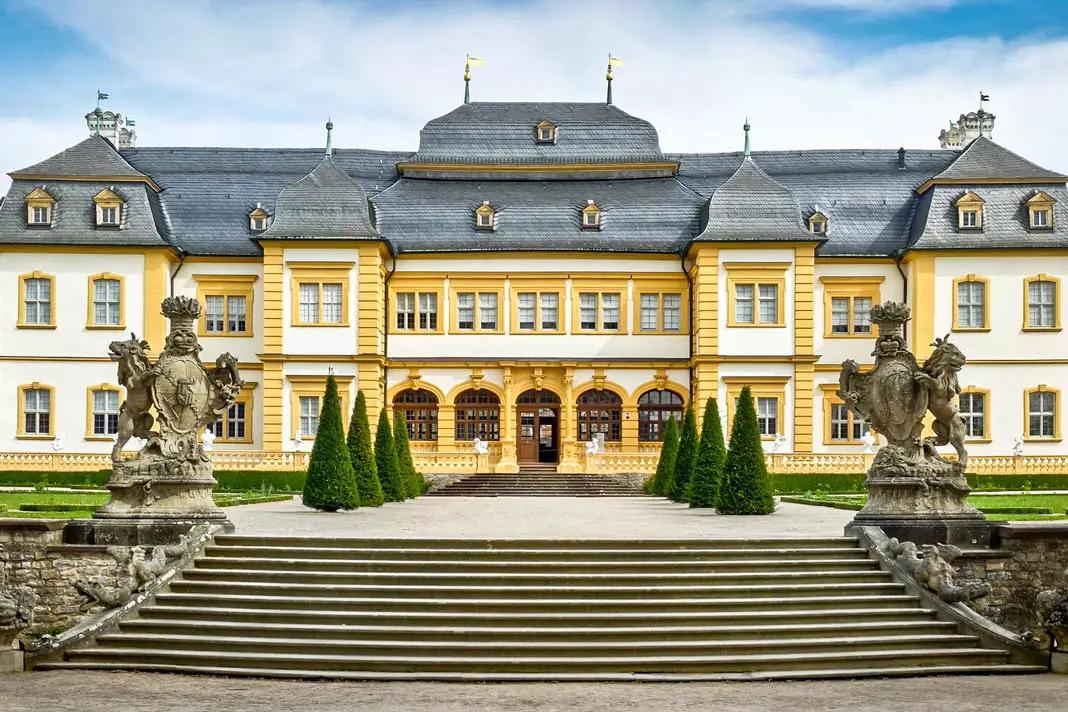
The famous Veitshöchheim Palace is another top attraction.
In 1814 it became the property of the Bavarian Crown and thus also served as a summer palace for the Kings of Bavaria. Since the end of the First World War, the castle has belonged to the Free State of Bavaria and has opened its doors to visitors since 1932.
A highlight is the visit to the Court Garden, which is considered one of the most beautiful rococo gardens in Europe . It was laid out in 1702 as a flower garden and in the course of the 18th century was furnished with many artistic elements such as fountains, sandstone sculptures and pavilions. Nowadays, the water games on the Great Lake at the top of every hour are particularly inspiring.
Address: Echterstraße 10, 97209 Veitshöchheim(Google Maps)
The most beautiful wineries in Würzburg
The wine town of Würzburg is known throughout Germany for its excellent grape varieties. Wine lovers in particular should not miss a visit to one of the many wineries, in addition to the great sights. You can find my top 3 w ineries here:
The Juliusspital (website) is located in an imposing princely building in the heart of Würzburg. It looks back on a history of over 440 years: in 1576, Prince-Bishop Julius Echter von Mespelbrunn established the Juliusspital Foundation to help the needy. He financed this charitable project through the profits from wine cultivation.
Today, with around 180 hectares of vineyards, the Juliusspital is the second largest winery in Germany and even the largest Silvaner winery in the world. The 250-metre-long wooden barrel cellar has a very special historical ambience. During a wine tasting, you can convince yourself of the quality of the wine.
Afterwards, you can fortify yourself with Franconian delicacies in the cosy Juliusspital wine taverns.
Address: Klinikstraße 1 (Google Maps) Klinikstraße 1(Google Maps)
The beautiful Bürgerspital zum Heiligen Geist winery (website) has belonged to the foundation of the same name for people in need of care since it was founded in 1316. On 120 hectares of farmland, the grape varieties Riesling, Silvaner and Burgundy are cultivated and bottled in the typical Bocksbeutel.
During a guided tour of the cellar , you will learn all there is to know about the winery and you can also taste a white wine or two. The Bürgerspital wine taverns invite you to round off your visit in a beautiful ambience.
Address: Theaterstraße 19 (Google Maps): Theaterstraße 19(Google Maps)
Nearby you will also find the Staatlicher Hofkeller (website), whose origins date back to 1128. In the former prince-bishop's Hofkeller you will feel as if you have been transported to another world and time: winding cellar corridors, vaults lit with candles and wine barrels as far as the eye can see.
A very special experience is the wine tasting in the barrel cellar, which has 100 wooden barrels and a large chandelier for a unique flair. In the official wine cellar you can experience history up close. The wooden barrels stored here are silent witnesses to the times and once contained the liquid pay of the court servants - in other words, their wages, most of which were paid out in wine.
As you can see: whether it's a guided tour of the cellar or a wine tasting - you won't soon forget a visit to the Staatlicher Hofkeller.
Address: Residenzplatz 3(Google Maps)
Things to know about Würzburg
The city was first mentioned in a document in 704 - at that time as "in castello Virteburch".
Würzburg's Julius Maximilian University was first founded in 1402, making it the oldest university in Bavaria.
Today Würzburg has about 128,000 inhabitants
Würzburg is a European city - this epithet is given to cities that stand out for their commitment to European understanding.
Basketball legend Dirk Nowitzki was born here
The Franconian royal seat is famous for its Franconian wine from the "Bocksbeutel".
Parts of the film The Three Musketeers (2011) were shot in Würzburg
For the more active, I recommend the MainRadweg in Franconian wine country, which runs through Würzburg. More information at Heiko from People Abroad