Brugge (Bruges), romantic and interwoven with canals, is rich in parks, has a network of bicycle lanes and will captivate you with its bustling markets, trendy shops and art museums full of works by Belgian artists. Not to mention beer and chocolate, some of the best in the world. Here's how to enjoy this little masterpiece with two days to spare.
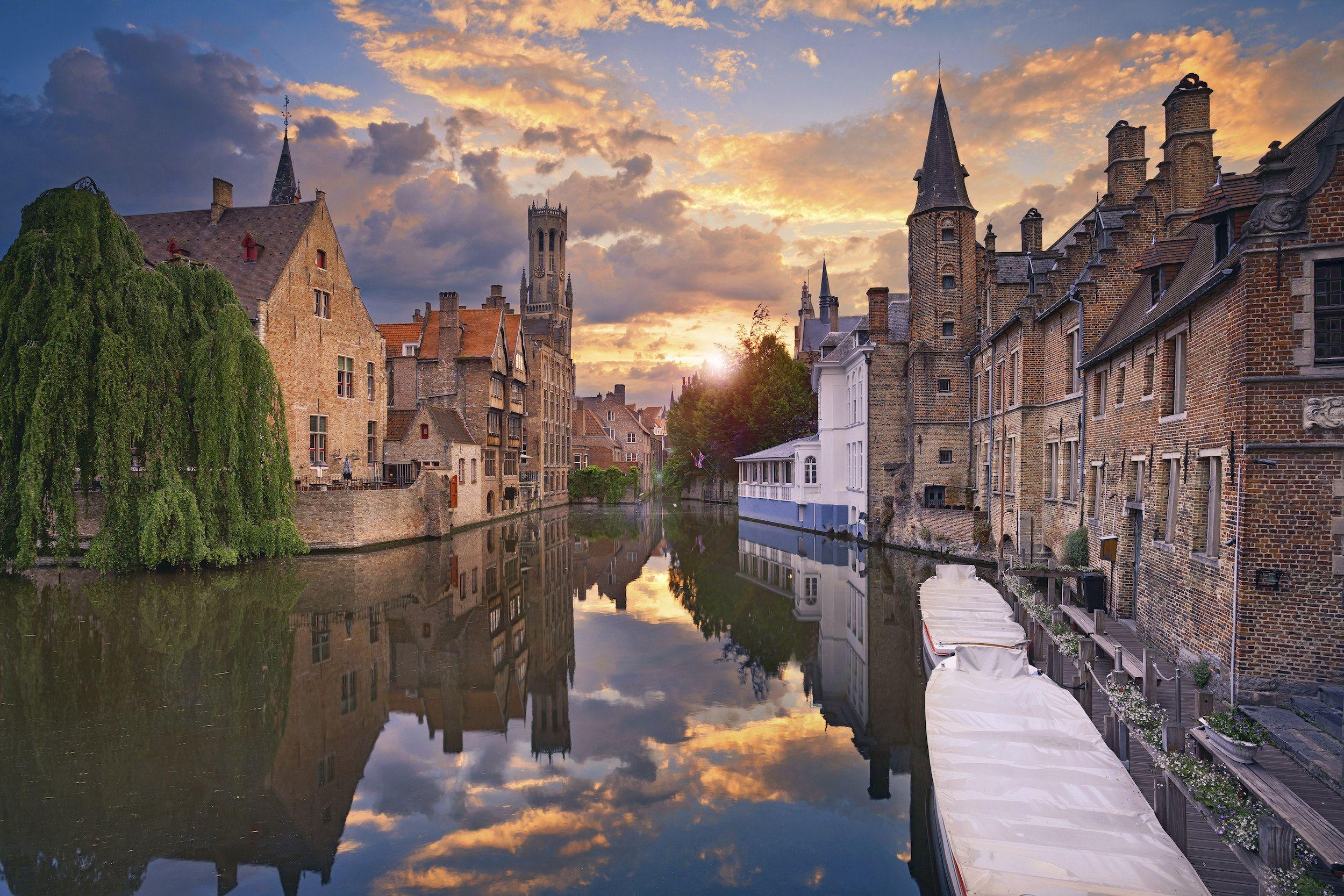
Brugge is a little gem to explore at your leisure ©RudyBalasko/Getty Images
First day in Brugge
Stroll past the fish market, the Vismarkt: even today, on the stone stalls of this 1821 colonnade, fishmongers display their freshest wares, along with trinket sellers who join in throughout the day. Several fish restaurants overlook the adjacent Huidenvettersplein, a picturesque square of medieval buildings including the former headquarters of the tanners' guild. Alternatively, dedicate 30 minutes to a canal cruise: seeing Brugge from the water on the course is an experience not to be missed.
Climb the Belfort, the symbol of Brugge and a UNESCO World Heritage Site. The tower dates back to the 13th century and dominates the Markt with its 83 metre height. Climbing the 366 steps you can admire the treasure, the main bell and the carillon consisting of 47 bells, which is played by hand. Beyond the spires and red-tiled roofs, you can see the wind turbines and giant cranes of Zeebrugge from the top.
Pay homage to the city's most sacred relic in the Basiliek van het Heilig Bloed and then refresh yourself with lunch at De Belegde Boterham, popular with the local, affluent clientele. The monochrome design is a little formal, but the ambience is cosy and the excellent cuisine (soups, sandwiches and mixed salads) makes use of fresh, tasty ingredients.
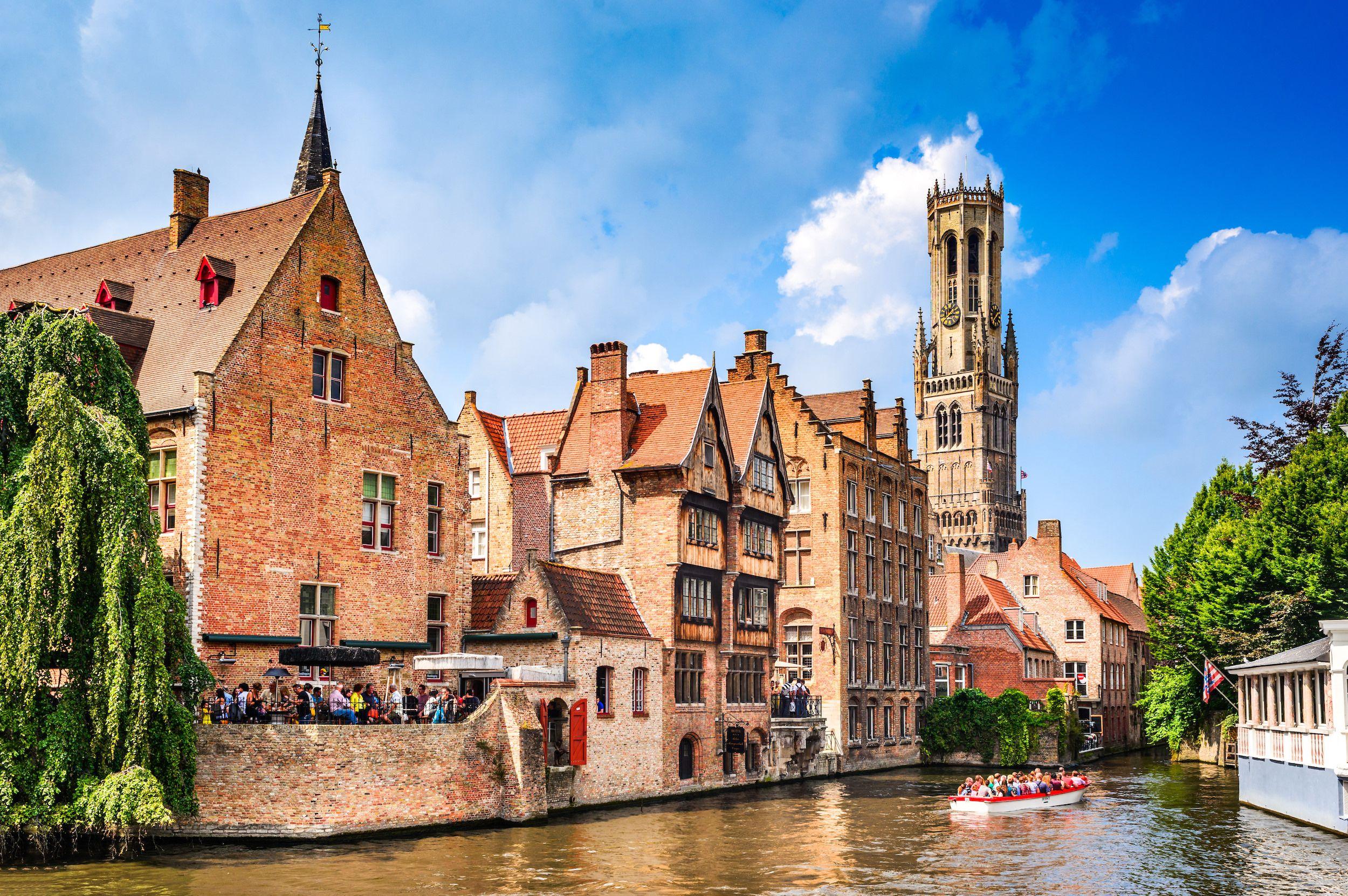
The Campanie Belfort, symbol of Brugge and UNESCO World Heritage Site ©Emi Cristea/Shutterstock
You are now ready to immerse yourself in Belgian art at the Groeningemuseum. Brugge's most important picture gallery brings together a very rich collection of Flemish and Renaissance primitive paintings that testify to the city's conspicuous fortunes, portrayed with masterly realism. There are interesting views of old Brugge, a stunning painting by Hieronymus Bosch and more meditative works by Van Eyck and Memling. More recent artists include Khnopff, Magritte and Delvaux. If you are short of time, concentrate on the works of Flemish primitives, the flagship of the collection.
If you prefer to relax, opt for the serenity of the begijnhof which, despite the hordes of summer tourists, remains a relatively peaceful oasis. In front of the 1776 access bridge, there are several touristy restaurants with terraces, lace shops and kiosks selling waffles.
Towards evening, make a stop at the Brouwerij De Halve Maan, the brewery of the Brugse Zot, founded in 1856, the last family-run brouwerij (brewery) still standing in the centre of Brugge. Then dine at Den Dyver, where each dish is paired with the beer used in its preparation. Close the evening in Brugge's oldest pub, the picturesque Herberg Vlissinghe. A local legend has it that Rubens, after painting a fake coin on one of the tables, ran away. The interior has well-preserved panelling and a wood-burning stove; in summer, the best tables are in the shady garden, where they also play boules.
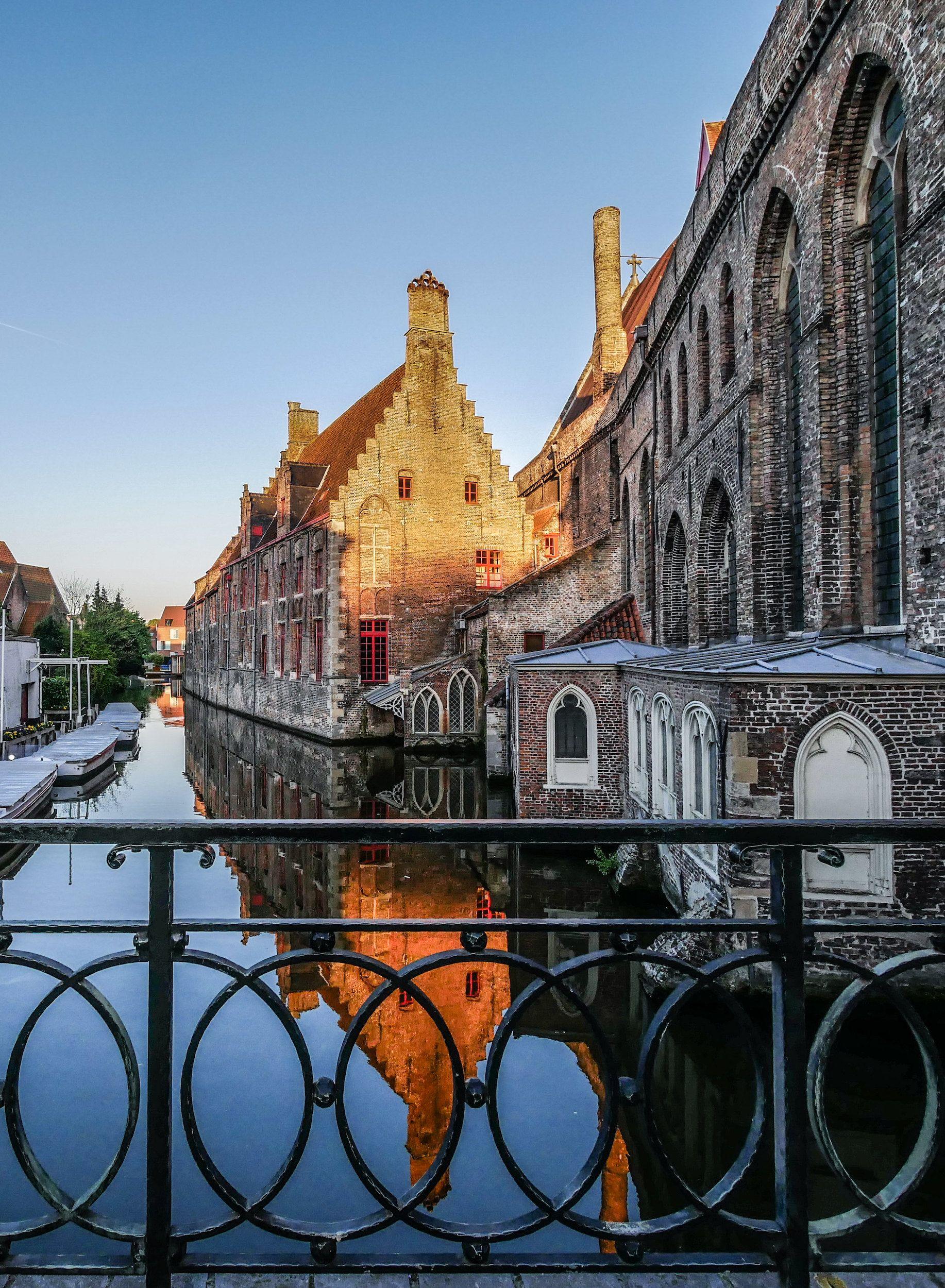
The canals of Brugge ©Jess Lauer/Shutterstock
Sign up for our newsletter! For you every week travel tips, special offers, stories from around the world and 30% discount on your first order.
Second day
Take an early morning walk in the Sint-Anna district to visit the Jeruzalemkerk, one of Brugge's most unusual churches, located within the so-called Adornesdomein. Probably inspired by the Basilica of the Holy Sepulchre in Jerusalem, it is a sinister building with a grim altarpiece covered with carved skulls and an effigy of the lifeless Christ hidden in a chapel at the back. The entrance ticket is also valid for the small museum that occupies several of the pretty buildings on the estate.
In the Volkskundemuseum, suggestions of the Flemish lifestyle of bygone days await you: a sweet shop from the 1930s, a hatter's workshop, a traditional kitchen and much more. The exhibition occupies an atmospheric godshuis (charity house), while the museum café, De Zwarte Kat, is a timeless place with a good selection of beers. The temporary exhibitions on the upper floor are often of great interest. Traditional lollipops are made here on the first and third Thursday of the month.
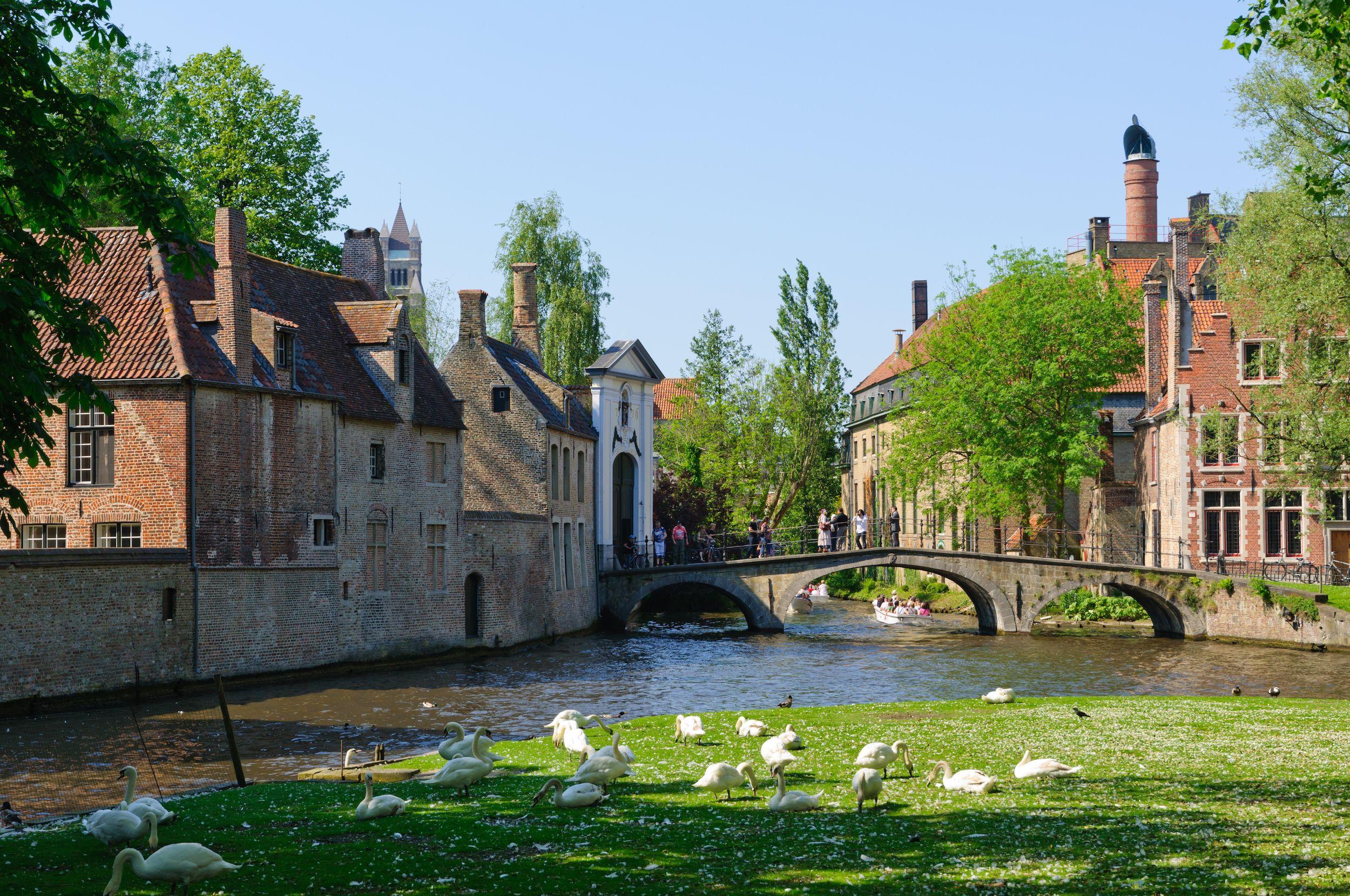
Relax in the serenity of the begijnhof ©Scirocco340/Shutterstock
Have lunch with pub food and gueuze (beer) at De Windmolen, from which you can observe a still functioning windmill. Immerse yourself in the art and architecture of the Museum Sint-Janshospitaal. Housed in the restored chapel of a 12th-century hospital with superb original wooden beams, this museum houses a collection of period medical instruments, but its fame is mainly due to the six masterpieces by 15th-century artist Hans Memling, including the enchanting Reliquary of St Ursula, which looks like a miniature Gothic cathedral.
After so much art, take a stroll around Minnewater Park, stop for an aperitif in the delightful dehors of De Stoepa, a venue in a quiet residential setting, which has a vaguely hippy/buddhist feel, with oriental sculptures, terracotta-coloured walls, a metal stove and wooden floors and furniture creating a homely yet classy ambience.
In the evening, treat yourself to a show at the Concertgebouw, Brugge's futuristic concert hall by architects Paul Robbrecht and Hilde Daem. End the day by taking a stroll under the gas lamps, stopping for a last drink at De Republiek. Arranged around a courtyard between picturesque brick buildings, it is a large and dynamic venue that will make you feel at home among the bruggelingen (inhabitants of Brugge).